
Hotel Laundry Service: Simplify Linen and Towel Care
Hotel laundry is more than washing fabric. Every sheet, towel, pillowcase, and uniform has to return clean, consistent, and ready for the next shift or guest arrival. When that work is handled in-house, housekeeping teams also manage equipment, supplies, labor, inventory, and scheduling.
A hotel laundry service manages the full linen cycle for a property, from pickup and sorting through commercial washing, drying, finishing, inventory control, and delivery. Outsourcing can reduce the burden of on-site industrial machinery while giving hotels a structured process for guest linens, towels, and uniforms. A well-managed program also gives staff more time to focus on guests instead of linen management, as described by ImageFIRST.
Explore commercial laundry service for hotels
The right program is defined by more than clean-looking fabric. It must protect the separation of dirty and clean items, support dependable inventory flow, and fit the property’s daily operating rhythm. Here is what that process can include and what hospitality teams should evaluate before choosing a partner.
What a Hotel Laundry Service Does for Your Property
A hotel laundry service manages the recurring textile work that keeps rooms ready and operations moving. That can include guest sheets, pillowcases, duvet covers, bath towels, hand towels, washcloths, and other room linens. Depending on the property’s needs, the program may also cover staff uniforms and related hospitality textiles. Items are collected, processed, inspected, and returned for continued use, giving housekeeping a dependable supply of clean laundry without making linen management a separate daily burden.
This is a commercial program, not the same as residential wash-and-fold. A hotel’s account is built around recurring business needs, higher-volume linen flow, consistent handling, and processes that fit housekeeping schedules. A provider may organize pickup and delivery around the property’s routine. It can offer free pickup and delivery with a personalized account, giving the team a clear point of contact for inventory and service questions. These details matter when clean sheets and towels must be available across multiple room turns.
The scope can extend beyond simply washing fabric. Hotel laundry workflows commonly include marking or identifying items, washing them with appropriate processes, pressing or finishing them when needed, and returning them in an organized condition. This helps the property keep track of what is in circulation and remove worn or stained pieces before they reach a guest room. Consistent inventory control and transparent billing also give managers better visibility into the program and its operating costs. Learn more about our commercial laundry service.
A well-managed arrangement also changes how hotel staff spend their time. Instead of coordinating linen loads, monitoring equipment, and solving recurring laundry bottlenecks, housekeeping leaders can focus on room readiness and guest needs. The laundry partner handles the processing side while the property maintains oversight of its inventory and service expectations. For hotels that need a practical alternative to maintaining an on-site industrial laundry operation. Separating this work into a dedicated commercial service can support a cleaner, more consistent workflow.
How a Hotel Laundry Service Handles Guest Linens and Towels
A dependable linen program follows a controlled path from pickup to return. That consistency matters because sheets, pillowcases, duvet covers, bath towels. And other guest textiles must be ready for the next arrival without being mixed up, damaged, or returned with inconsistent results. A professional commercial hotel laundry partner manages each stage with hospitality volume and fabric care in mind.
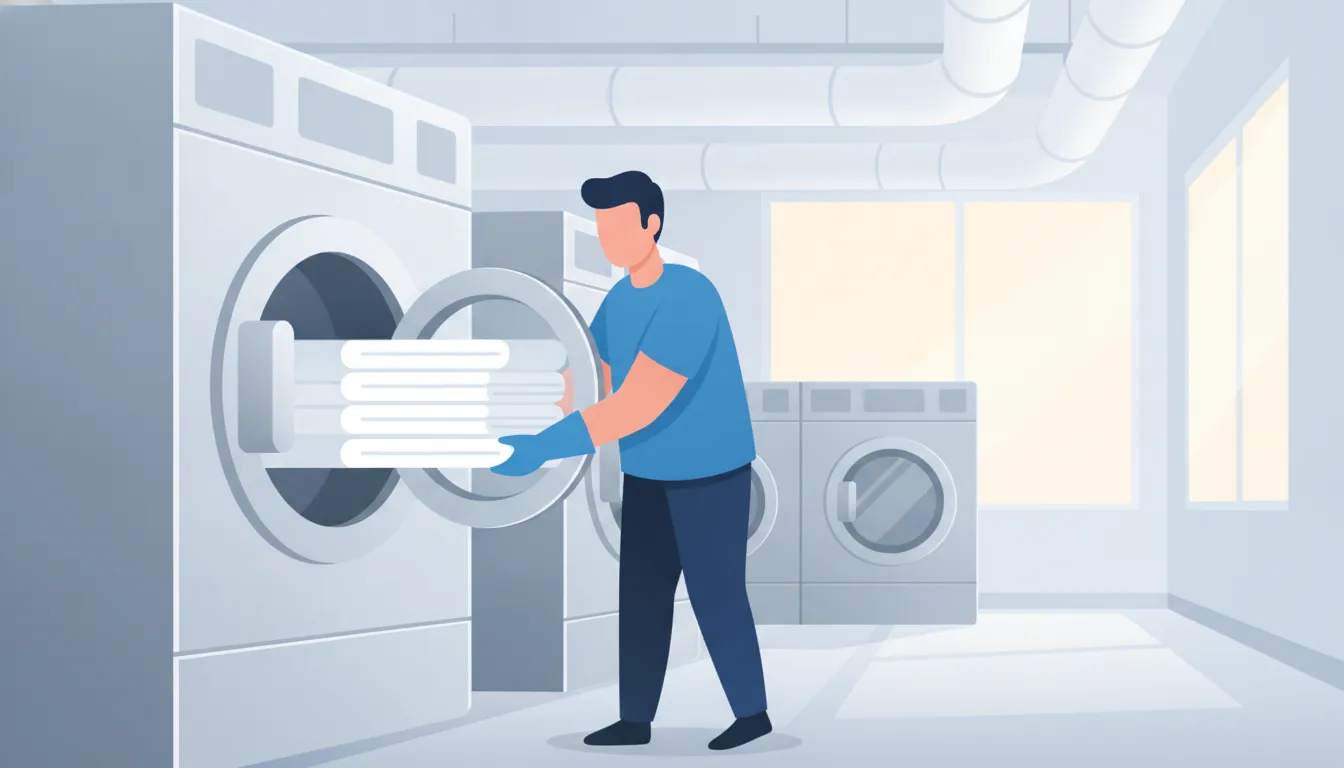
1. Collection and organized pickup
The process begins when used linens and towels are collected from housekeeping or another designated area. Dirty textiles should remain separate from clean items during transport and storage to reduce the risk of cross-contamination. A reliable pickup routine also helps the property maintain a predictable linen inventory, rather than sending mixed or unidentified loads into processing.
At pickup, the laundry partner receives the items according to the hotel’s account and service requirements. Consistent pickup and delivery schedules make it easier for housekeeping managers to plan room turns and maintain enough clean inventory for daily operations.
2. Sorting by fabric and care requirements
Before washing, textiles are sorted by fabric type, color, soil level, and care requirements. Towels, sheets, duvet covers, and specialty items do not necessarily need the same cycle. Separating loads helps protect delicate fibers while giving heavily soiled items the cleaning action they require. Staff who sort soiled textiles should also use appropriate protective equipment, such as gloves and protective garments.
3. Commercial washing with formulated detergents
Hotel linens are washed in commercial equipment using high water temperatures and professional detergents. Industrial laundry processes combine water, agitation, dilution, and detergent chemistry to remove soil and reduce microorganisms. Commercial detergent formulas are designed to balance cleaning power with fabric care, helping remove stains while protecting the useful life of quality linens.
Hotels should strip guest rooms completely between bookings and replace the bedding with freshly laundered linens for every new arrival. That standard makes thorough, repeatable processing essential, especially during busy turnover periods.
4. High-heat drying and professional finishing
After washing, linens move through high-heat drying. Drying provides an additional sanitization step while fluffing the fibers for a more comfortable feel. The correct drying process also helps prevent damp items from being folded or stored before they are ready.
Finally, clean items are inspected, folded, and organized to a guest-ready standard. Proper finishing keeps sheets and towels easy for housekeeping teams to identify and use. The result is a smoother handoff from the laundry operation back to the hotel, with staff spending less time managing linen problems and more time focused on guests.
Outsourcing Versus In-House Laundry: What Actually Saves Money
The cheapest option is not always the one with the lowest visible line item. Running laundry inside a hotel can require industrial washers and dryers, water, energy, detergents, repairs, maintenance, staff time, and dedicated square footage. Those costs continue even when occupancy changes. A professional hotel laundry service converts more of that work into a managed operating expense while allowing housekeeping and management teams to focus on rooms and guests.
Outsourcing also changes what your property does with its physical space. A laundry room, linen staging area, chemical storage, and equipment access zones can take up valuable floor space. Reclaiming that area may support guest-facing amenities, additional storage, or a more efficient housekeeping operation. Research on commercial laundry outsourcing identifies equipment, supplies, labor, utilities, and recovered floor space as key cost considerations when a property weighs its options.
| Cost or operating factor | In-house laundry | Professional outsourcing |
|---|---|---|
| Equipment investment | The hotel purchases and replaces industrial washers, dryers, finishing equipment, and related infrastructure. | The laundry provider supplies and maintains the processing equipment, reducing the hotel’s machinery overhead. |
| Labor | Employees must sort, wash, dry, fold, inspect, and manage linen flow during every operating period. | The provider manages processing, giving hotel staff more time for guest needs and core housekeeping work. |
| Utilities and supplies | The property absorbs water, electricity or gas, detergents, stain treatments, and chemical storage costs. | These inputs are part of the service operation, with billing structured around the agreed program rather than each hotel managing every supply purchase. |
| Floor space | Significant space remains dedicated to machines, sorting, storage, ventilation, and linen staging. | The hotel can reclaim laundry-room space for revenue-generating or operational uses. |
| Turnaround | Timing depends on hotel staffing, machine availability, maintenance, and daily volume. | Scheduled pickup and delivery can create a more consistent linen flow tailored to the property’s needs. |
| Fabric care and quality | Results depend on staff training, equipment condition, detergent selection, and quality checks. | Specialized processes and inventory controls support consistent fabric care and help manage worn or stained items. |
Outsourcing is not automatically the right choice for every property. A hotel should compare its actual volume, labor model, available space, equipment age, maintenance needs, and service requirements. It should also ask how the provider handles inventory and invoices. Commercial linen programs may offer tailored inventory control and transparent billing, making operating costs easier to track than a collection of fluctuating utility, supply, repair, and payroll expenses. Learn more about commercial laundry for hotels and the savings model.
The strongest comparison looks beyond laundry cost alone. If outsourcing protects linen quality, reduces machinery downtime, returns usable floor space, and keeps staff focused on guests, its value reaches into the wider hotel operation.
Why Sanitization Standards Matter for Hotel Bedding
Hotel bedding is part of the guest experience before anyone evaluates the room design, amenities, or service. Fresh, bright linens create a visible signal of cleanliness, while a stain, lingering odor, or rough finish can undermine confidence immediately. For that reason, hygiene is not only a housekeeping responsibility. It is a quality standard that can influence guest satisfaction and help a property compete.
A dependable hotel laundry service should use a controlled process rather than treating every load like routine household laundry. The Centers for Disease Control and Prevention explains that laundering’s antimicrobial action comes from several factors working together. Including dilution and agitation in water, removal of microorganisms, and the soap or detergent used. Thermal action from hot water and chemical action from cleaning products both contribute to the result. The CDC’s laundry and bedding guidance outlines these principles for commercial and healthcare environments.
Thermal and chemical action work together
Temperature alone is not the entire sanitization strategy. Commercial detergents support cleaning while helping the process balance stain removal with fabric care. When fabric types allow it, chlorine bleach can enhance laundering as an economical, broad-spectrum chemical germicide. For linens that require a different approach, activated oxygen-based products can provide antimicrobial activity with added fabric and color safety compared with chlorine.
Those choices matter in hospitality because sheets, pillowcases, duvet covers, towels, and other textiles may have different care requirements. A consistent program applies the appropriate chemistry and wash conditions to the textile instead of relying on a single product for every load. After washing, drying provides another important step. High-heat drying can add sanitizing action while fluffing fibers and helping linens feel comfortable when they return to the room.
Handling controls protect clean linens
Sanitization can be undermined if clean textiles are recontaminated after washing. Dirty linens should remain separate from clean linens during transport and storage. In commercial operations, equipment should also be used and maintained according to the manufacturer’s instructions to help prevent microbial contamination of the laundry system.
Worker practices are part of the standard as well. The CDC recommends appropriate personal protective equipment, including gloves and protective garments, when personnel sort soiled fabrics and textiles. Laundry areas should provide readily available handwashing facilities for workers. These safeguards support a clear separation between the soiled side of the process and the clean side, reducing opportunities for contamination to travel with a load.
For hotel operators, the benefit is consistency. A documented approach to washing, chemical selection, drying, storage, and handling gives housekeeping teams a reliable supply of clean bedding and towels. It also frees staff to focus more on guest needs instead of managing every stage of linen processing. When cleanliness is visible, repeatable, and supported by sound handling practices, it becomes more than a minimum requirement. It becomes part of the property’s reputation.
How Much Does a Hotel Laundry Service Cost?
There is no responsible one-size-fits-all price for hotel laundry service. A property’s quote depends on how much laundry it sends, which textiles require processing, how quickly clean items must return, and how often pickups and deliveries occur. A boutique hotel with steady weekly volume has a different operating profile from a larger property managing frequent room turns, banquet linens, towels, and staff uniforms.
The best comparison is not simply a per-pound figure. It is the total cost of producing clean, guest-ready laundry through an in-house operation versus using a commercial partner. Professional outsourcing can help a hotel maintain fabric-care and sanitization standards without the expense of maintaining on-site industrial machinery. It can also remove several costs that are easy to overlook when evaluating a quote.
What determines the quote?
- Volume: The amount of linen and terry processed during a normal week affects staffing, equipment requirements, scheduling, and the structure of the service plan.
- Linen type: Sheets, pillowcases, towels, duvet covers, table linens, and uniforms may require different handling, finishing, folding, or packaging procedures.
- Turnaround: Standard service and faster turnaround have different operational demands. Ask how the provider handles peak occupancy, unexpected volume, and urgent replenishment needs.
- Pickup and delivery frequency: More frequent service may support tighter linen inventories, while a different schedule may fit a property with more storage capacity and predictable demand.
Compare the full operating cost, not just the invoice
An in-house laundry requires more than washers and dryers. The property also carries equipment maintenance, repairs, cleaning supplies, labor, utilities, and the floor space needed to operate and store the system. Outsourcing can eliminate or reduce those overhead categories while reclaiming laundry-room space for guest-facing or revenue-generating purposes. Those savings should be included in the comparison, even though they may not appear as a line item on a laundry invoice.
For a useful evaluation, estimate the internal cost of labor, utilities, supplies, equipment ownership, maintenance, replacement planning, and downtime. Then compare that total with the proposed service scope. A commercial laundry provider should explain what is included, how items are counted or weighed, how damaged or worn linens are handled, and what happens when volume changes.
Look for predictable billing and inventory control
Transparent billing makes a hotel laundry budget easier to manage. Flat-rate billing and clear invoices can reduce surprises, while inventory control helps maintain appropriate linen levels and manage program costs. Ask whether the provider offers reporting, account-level tracking, and a process for identifying missing, worn, or stained items before they return to guest rooms. These controls turn a recurring operational expense into something managers can monitor and plan.
When comparing proposals, request the same information from each provider: included services, textile categories, turnaround expectations, pickup schedule, quality controls, billing method, and inventory procedures. That side-by-side view reveals the real value of hotel laundry service without relying on an unsupported headline price.
What to Look for in a Commercial Laundry Partner
The right partner should fit the operating rhythm of your property, not simply process a high volume of sheets and towels. Start by asking how the provider manages turnaround. Topspin Laundry offers a standard 24- to 48-hour turnaround, along with same-day express options. So hotel managers can evaluate whether the available service levels align with occupancy patterns, housekeeping schedules, and unexpected demand.
Pickup and delivery should be just as dependable as the washing itself. A useful program includes free pickup and delivery, accurate pickup, and a consistent schedule tailored to the property. Errors at collection can create inventory gaps later, while missed or inconsistent deliveries can put pressure on housekeeping. Hospitality laundry programs commonly pair on-time delivery with accurate pickup and ongoing inventory management, rather than treating each order as an isolated transaction. Learn more about hotel linen service standards.
Ask how the provider tracks your inventory and handles exceptions. A strong partner should be able to discuss how clean and soiled items are accounted for, how worn or stained linens are identified, and how shortages are communicated. Consistent inventory management helps prevent last-minute surprises and gives managers a clearer view of what is available for rooms, housekeeping, and back-of-house needs.
Billing should be easy to understand before service begins. Look for flat-rate or otherwise transparent billing with invoices that clearly show what was processed. A predictable structure makes it easier to compare outsourcing costs with the labor, utilities, supplies, equipment, and floor space required for an in-house operation. The goal is not merely a lower line item. It is a manageable laundry program that improves operational efficiency and lets staff spend more time focused on guests and less time managing linens.
Capacity and fabric-care expertise matter when choosing a commercial laundry service. Topspin Laundry’s commercial operations are built for 2,000 to 5,000 pounds of daily capacity, supporting local business needs that require more than residential-scale processing. Ask whether the provider uses cleaning formulas and cycles suited to different fabrics, weights, colors, and finishes. Commercial detergents should balance cleaning power with fabric care, helping protect the useful life and appearance of hospitality textiles.
Finally, look for a partner that can explain its process clearly and tailor account support to your property. Reliable communication, practical inventory controls, suitable turnaround options, and careful fabric handling are more valuable than vague promises. Compare those capabilities against your actual linen volume and service requirements, then choose the provider that can make the daily workflow more predictable.
How Hotel Laundry Service Works Step by Step
A well-run hotel laundry program follows a defined chain of custody from the moment soiled linens leave a property to the moment fresh items return. That process matters because sheets, pillowcases, duvet covers, towels, and other textiles move through the operation in large volumes. Each stage should protect cleanliness, preserve fabric quality, and give the hotel a dependable way to keep rooms, suites, and guest amenities supplied.
For a hotel evaluating a commercial partner, the workflow should be clear before service begins. The provider and property can establish collection procedures, identify the types of textiles being handled, and determine how inventory will be organized. From there, the core process generally includes these steps:
- Schedule collection of soiled linens. The hotel gathers used sheets, towels, pillowcases, duvet covers, and other approved textiles in a designated area. Soiled items should remain separated from clean inventory during handling and transport. The collection schedule should fit the property’s housekeeping rhythm, room occupancy, and storage capacity. Hotels can schedule a pickup to begin discussing a collection routine that matches their operation.
- Sort textiles by fabric and soil level. At the laundry facility, items are evaluated and separated before they enter a wash cycle. Sorting by material helps protect delicate fibers from unnecessarily aggressive treatment, while sorting by soil level helps match the load to an appropriate cleaning approach. This step also keeps different categories, such as towels and bedding, organized throughout processing.
- Wash with commercial equipment and detergents. Hospitality linens go through commercial washing using high water temperatures and commercial-grade detergents. This combination is designed to remove soils and allergens while keeping fabrics intact. Commercial detergents are formulated to balance cleaning power with fabric care, which is important when the same bedding and towels must withstand repeated laundering. The exact cycle should reflect the textile type and its condition rather than applying one setting to every load.
- Dry at high heat when the fabric allows. After washing, linens move into a drying process suited to the material. High-heat drying can provide an additional sanitization step and helps fluff the fibers, supporting the soft, comfortable feel guests expect from freshly prepared bedding and towels. Temperature and handling still need to be appropriate for the item, since fabric care is part of maintaining a usable linen supply.
- Finish, fold, and prepare the clean inventory. Clean textiles are finished and folded so they can be stored, transported, and placed into service efficiently. This stage is also an opportunity to identify items that need additional attention or should be removed from circulation because of persistent stains, damage, or excessive wear. Consistent presentation makes it easier for housekeeping teams to locate the right items during room turnover.
- Track and deliver fresh linens. The final step is returning the processed inventory through an organized delivery process. A dependable program keeps clean items protected from soiled materials and supports accurate inventory control as linens move back to the hotel. Delivery planning should account for the property’s expected usage and storage needs, without relying on an unverified turnaround promise. Clear handoff procedures help housekeeping teams know what has arrived and keep the next collection cycle on track.
This step-by-step structure gives hotel managers a practical way to evaluate a laundry partner. Ask how the provider handles sorting, fabric-specific washing, drying, finishing, inventory movement, and delivery coordination. A transparent process reduces avoidable confusion and lets hotel staff focus more of their time on the guest experience instead of managing every stage of linen care themselves.
Schedule your hotel’s laundry pickup
Frequently Asked Questions
How do hotels handle guest laundry and dry cleaning?
Guest garments are typically marked for identification, then washed, dried, pressed, and returned to the guest room or front desk. That guest-facing service is different from the bulk commercial program used for sheets, towels, duvet covers, and uniforms. A commercial partner sorts those items by type and soil level. Washes them with appropriate commercial formulas, finishes them for use, and returns them on the hotel’s delivery schedule.
What does a hotel laundry service usually cost?
There is no single standard price. Cost depends on the types and volume of textiles, the processing requirements, pickup and delivery needs, and the account’s service schedule. Ask for a transparent proposal that explains how items are billed, what inventory controls are included, and which services are part of the regular program. This makes outsourcing easier to compare with the equipment, labor, supplies, utilities, and floor space required for in-house laundry.
How quickly can hotel laundry be completed?
Turnaround depends on the provider’s capacity, the size of the order, and the hotel’s operating requirements. Topspin Laundry offers standard 24-48 hour turnaround with same-day express options for local commercial customers. Confirm the expected schedule before starting service, especially if your property has frequent room turnover or limited linen inventory.
What should a hotel ask before choosing a laundry partner?
Ask how the provider separates soiled and clean textiles, handles different fabric types, tracks inventory, manages stains, and protects delivery accuracy. Also confirm pickup frequency, turnaround, account support, capacity, and billing terms. A strong partner should make the process predictable while freeing housekeeping staff to focus on guest needs instead of managing laundry logistics.
Ready to Schedule Your Hotel Laundry Pickup?
A dependable commercial laundry partner can help your team keep linens, towels, and uniforms moving through a consistent process while reducing laundry-related workload. When you are ready to simplify pickup and delivery for your property, schedule your hotel’s commercial laundry pickup and delivery. Share your needs through the scheduling page, and Top Spin Laundry can help you take the next step.
