
Commercial Laundry Service in Los Angeles: A Local Guide
For a restaurant, salon, gym, medical office, hospitality operator, or other local business, laundry is part of the customer experience and the daily workflow. A commercial laundry service in Los Angeles can take recurring linens, towels, uniforms, and other washable items out of your team’s routine, but the right provider still needs to fit your location, volume, schedule, and handling requirements.
Explore Top Spin Laundry’s commercial laundry service for local businesses.
What Does a Commercial Laundry Service in Los Angeles Include?
Commercial laundry service is a recurring business arrangement for collecting or receiving, cleaning, drying, folding, packaging, and returning a business’s washable textiles according to agreed service details. Unlike an occasional drop-off load, a commercial account is built around repeat needs, consistent handling, and a schedule that works with the business’s operations.
The exact service depends on the provider and the account. A useful quote conversation should cover the items being processed, estimated weekly volume, preferred pickup or drop-off schedule, delivery details, folding or packaging preferences, and any special handling notes. These details help a laundry provider recommend a workable service plan instead of giving a vague one-size-fits-all answer.
Top Spin Laundry’s commercial program is designed for local businesses that need dependable help with recurring loads. The service page describes support for towels, cleaning cloths, linens, uniforms, guest bedding, and repeat wash-and-fold loads. Businesses can ask about pickup and delivery or bring laundry to the Mission Hills facility for drop-off service, depending on what fits the account.
Which Los Angeles Businesses Can Use Commercial Laundry Support?
Commercial laundry is useful anywhere clean textiles are part of the service, workday, guest experience, or sanitation routine. The goal is not to treat every business the same. It is to match the process to the items, soil levels, frequency, and return format that the business actually needs.
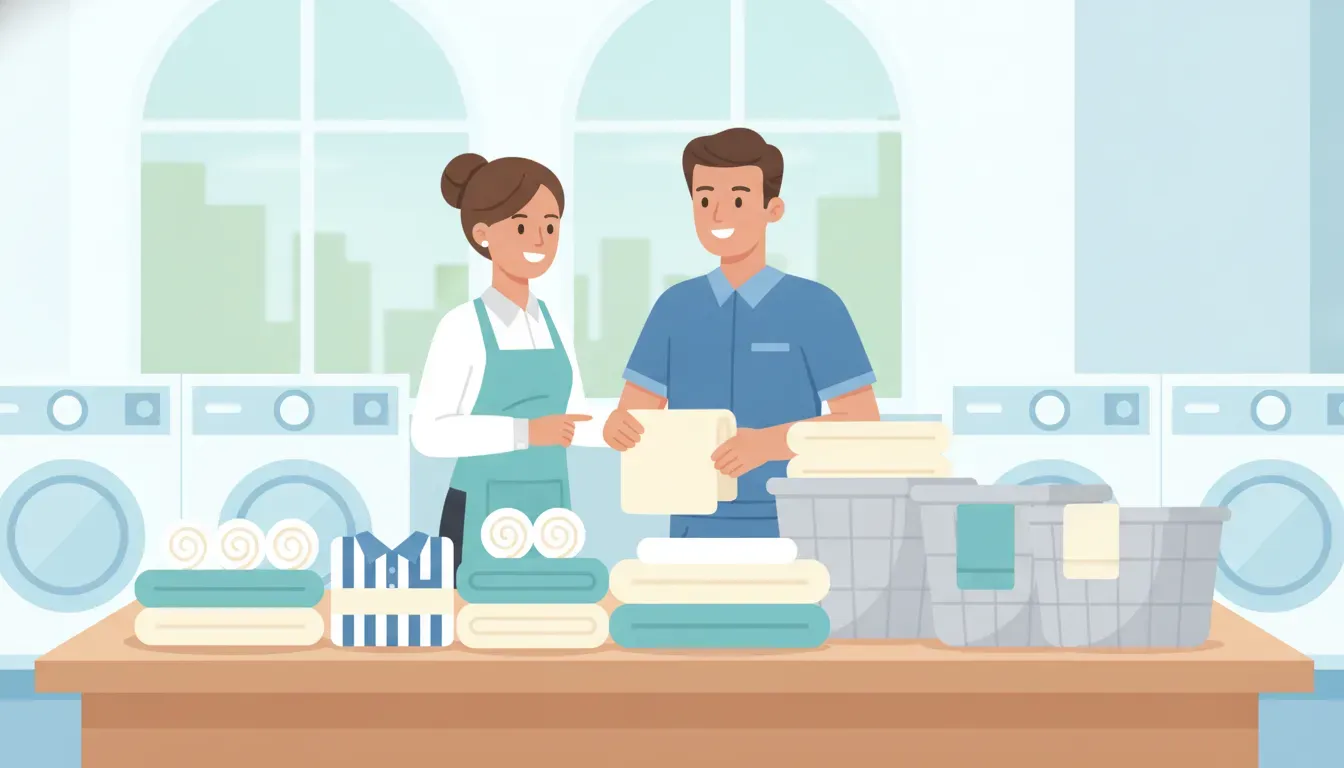
Restaurants and food-service businesses
Restaurants may send out tablecloths, napkins, kitchen towels, aprons, uniforms, and cleaning cloths. Grease, food residue, and frequent use can make these items difficult to manage alongside a normal household laundry routine. A business should tell the provider what it sends, how often it needs returns, and whether items need to be separated by type or use.
Top Spin Laundry also has a commercial laundry guide for restaurants in Mission Hills that addresses recurring restaurant linen and uniform needs in more detail. That industry-specific page is the better resource for a restaurant looking for a deeper operational discussion.
Salons, spas, and personal-care businesses
Salons and spas often handle towels, robes, sheets, capes, and other textiles throughout the day. A consistent return system helps staff start with clean supplies and keeps used laundry from taking over a back room. Color, fabric, stain, and folding instructions should be discussed before recurring service begins.
A salon owner can also review Top Spin Laundry’s commercial laundry service guidance for salons when the main need is towel and linen care for a personal-care business.
Gyms and fitness facilities
Fitness facilities may need repeat towel processing, staff uniform care, and help keeping up with high-use items. The important planning questions are how many towels circulate on a typical day, when used items can be collected, and how clean returns should be counted, folded, or packaged.
For that narrower use case, the gym towel laundry service guide covers fitness-facility laundry planning without requiring a general commercial buyer’s guide to repeat the entire topic.
Medical and dental offices
Medical and dental offices may need a clear process for scrubs, gowns, towels, and other approved washable items. The office should identify any material, separation, or handling requirements during the quote conversation. A commercial laundry provider can then confirm which items and processes it can support.
Top Spin Laundry’s medical laundry service page for clinics and dental offices is a more focused starting point for healthcare-related questions.
Hotels, short-term rentals, and hospitality operators
Hospitality businesses may cycle through sheets, towels, pillowcases, blankets, and other guest-facing textiles. The service plan needs to account for turnover patterns, storage, packaging, and the timing of clean returns. Operators should avoid assuming that a residential wash-and-fold workflow will automatically fit a hospitality operation.
See the hotel laundry service guide for a more specific discussion of guest linens and recurring hospitality laundry.
Other local businesses
Schools, cleaning teams, property managers, event operators, and other organizations may also have recurring washable items. If the business can describe what it needs cleaned, how much it produces, and when it needs the items back, a provider can determine whether a commercial account is a practical fit.
How Is Commercial Laundry Different From Doing Laundry In-House?
In-house laundry gives a business direct control, but that control comes with responsibility for equipment, labor time, utilities, detergent and supplies, sorting, folding, storage, and maintenance. It also requires a suitable place to process laundry without interfering with customer areas or core operations.
Outsourcing shifts much of that recurring work to a commercial laundry provider. The business still needs to communicate its requirements and review the returned items, but its team may spend less time moving loads through washers and dryers. The value is not simply that someone else operates a machine. It is the repeatable workflow around collection, processing, account communication, and organized return.
Neither option is automatically right for every business. In-house laundry may make sense when volume is low, equipment is already available, and staff time is not a concern. Commercial service may be more useful when laundry is frequent, space is limited, textile needs are growing, or the business wants a predictable outside process.
For a broader business-account explanation, read how laundry service for businesses handles accounts and turnaround. For an industrial-versus-in-house comparison, use Top Spin Laundry’s separate industrial laundry service guide rather than treating this local overview as a cost calculator.
What Should a Los Angeles Business Ask Before Choosing a Provider?
A good provider conversation should make the service practical to operate, not just sound appealing. Ask questions that reveal how the account will work week after week.
- What items can you process? List towels, linens, tablecloths, napkins, uniforms, cleaning cloths, bedding, or other items instead of describing the load only as “laundry.”
- How is volume estimated? Ask whether the quote uses weekly weight, item counts, pickup frequency, or another method. Bring your best estimate and explain seasonal changes.
- What pickup, delivery, or drop-off options are available? Confirm whether the provider can serve the business address and what schedule is realistic for that account.
- How are special instructions handled? Discuss stains, delicate materials, folding preferences, packaging, separation, and items that should not be processed together.
- What turnaround should the business plan around? Ask for the expected return window in writing and identify what happens when the business has an unusually large load.
- How are orders identified and returned? Learn how items are organized, packaged, and matched to the correct business account.
- Who handles account questions? A named contact or personalized account process can make changes easier when the business’s volume or schedule shifts.
- How does billing work? Ask what information appears on an invoice and whether the account is quote-based, recurring, or adjusted when volume changes.
These questions also help a business compare a local provider on service fit rather than on a headline claim. A lower apparent cost is not useful if the return schedule, item handling, or account communication does not work for the operation.
How Can a Business Prepare for a Commercial Laundry Quote?
The more specific the request, the easier it is for a provider to recommend an appropriate account. Before reaching out, gather a short operational brief:
- Business type and location: Explain whether the business is a restaurant, salon, gym, medical office, hospitality operation, or another local organization. Confirm the service address rather than assuming a broad Los Angeles service area.
- Textile list: Name the items that need care, such as towels, table linens, uniforms, napkins, sheets, or cleaning cloths.
- Estimated volume: Use a typical week if possible, then mention busy periods, events, or seasonal changes that could affect the load.
- Preferred schedule: Explain when laundry is ready, when the business can receive clean returns, and whether drop-off is practical.
- Handling details: Include stain concerns, folding or packaging preferences, separation needs, and any items that require special discussion.
- Decision timeline: Say when the business hopes to start or review options so the provider can set realistic next steps.
Top Spin Laundry’s quote process asks businesses to share their business type, estimated weekly laundry volume, preferred schedule, and special handling notes. That makes this brief a useful starting point for a local conversation. The final service fit, pricing, schedule, and coverage should be confirmed directly for the business address.
What Does a Recurring Commercial Laundry Workflow Look Like?
A recurring account works best when laundry responsibilities are clear at every handoff. The provider and business should agree on what is collected, how it is identified, when it is processed, and how clean items return to the operation. That shared workflow is often more important than a broad promise to handle high volume.
- Prepare and separate: The business gathers used textiles according to the agreed process and flags anything that needs special attention. Separating items by business area or textile type can make the account easier to manage.
- Collect or receive: The provider picks up the prepared laundry when that option is available, or the business brings it to the facility. The account schedule should fit the business’s busiest periods and available storage.
- Process and inspect: Items are sorted, washed, dried, folded, and packaged according to the confirmed instructions. The business should know how to communicate a material change, stain concern, or item that should not be processed.
- Return and restock: Clean items come back organized for use. A manager can then check the return, put supplies where staff need them, and report any issue while the order details are still clear.
This approach helps a restaurant plan around service, a salon plan around appointments, a gym plan around member traffic, and a medical office plan around its approved textile needs. It also gives both sides a practical way to adjust the account when volume or scheduling changes.
Why Consider a Local Commercial Laundry Provider?
Local service can make communication and logistics easier when the business is located near the provider’s operating area. A nearby facility may be easier to reach for an initial conversation, a drop-off arrangement, or a change in account instructions. It also gives the business a chance to ask practical questions about how items are handled before committing to a recurring routine.
Top Spin Laundry operates a bright, renovated 6,700-square-foot facility in Mission Hills with 150 new high-capacity Speed Queen machines. The facility is attended and well lit, has ample parking, and is conveniently accessed near the 118 Freeway and Sepulveda exit. Those details can matter to a local business that prefers to discuss its account in person or bring in recurring loads.
Top Spin Laundry serves Mission Hills and nearby San Fernando Valley communities, with commercial service details discussed around the business’s needs. A Los Angeles business outside that established coverage should confirm availability before planning around pickup, delivery, or drop-off. The same confirmation is worthwhile for any business with unusual volume or specialized textile requirements.
Schedule a conversation about pickup and delivery for your business laundry needs.
Frequently Asked Questions
How much does commercial laundry service cost in Los Angeles?
Commercial laundry pricing is quote-based because the total depends on business type, textile mix, estimated volume, handling requirements, schedule, and the service address. Ask for a quote using a specific item list and a typical weekly volume rather than relying on a residential per-pound assumption.
What items can a commercial laundry service clean?
Many commercial accounts involve towels, linens, tablecloths, napkins, uniforms, cleaning cloths, guest bedding, and repeat wash-and-fold loads. The provider should confirm whether it can handle each material and item before the account begins, especially when special handling or separation is needed.
Can a Los Angeles business get laundry pickup and delivery?
Pickup and delivery may be available for recurring business accounts, but coverage and scheduling should be confirmed for the exact address. Top Spin Laundry also offers a Mission Hills drop-off option for businesses that prefer to bring in their laundry.
What should I include when requesting a commercial laundry quote?
Include your business type, service address, item list, estimated weekly volume, preferred schedule, pickup or drop-off preference, and special handling instructions. Mention unusual busy periods so the provider can discuss a realistic plan.
Is commercial laundry separate from residential wash and fold?
Yes. Commercial laundry is planned around a business’s recurring volume, textile types, schedule, account communication, and return requirements. Residential wash and fold is intended for household laundry, while a commercial account needs a service plan built for the business’s workflow.
